
Inventory reconciliation is the process of comparing what your system says you have against what a physical count actually finds, then investigating and adjusting every gap above a set threshold. If you’re starting from scratch, don’t try to reconcile everything at once. Run a targeted count on your top-selling A SKUs first, then build out cycle counting with reason-code discipline from there.
TL;DR:
- Most inventory variances stem from receiving errors, unlogged transfers, or untracked returns, making disciplined inbound and transfer logging critical.
- Automated tools like barcode scanning, real-time system integration, and auto-flagging thresholds minimize manual work and catch discrepancies early.
- Focusing cycle counts on top SKUs weekly and performing full counts annually ensures ongoing accuracy without operational disruption.
- A live inventory portal through a 3PL simplifies reconciliation by providing immediate data access and reducing vendor-related sync errors.
- Establishing clear thresholds, KPIs, and a structured investigation process improves reconciliation efficiency and prevents recurring issues.
Table of Contents
- What Is the Inventory Reconciliation Process, Step by Step?
- Cycle Counting vs. Full Physical Counts: Which Method Fits?
- Why Do Inventory Discrepancies Happen?
- What Tools Reduce the Work of Reconciling Inventory Records?
- What Are the Right Thresholds, SLAs, and KPIs for Reconciliation?
- How Does a 3PL Partnership Simplify Reconciliation?
- A Practitioner’s Checklist for Building Reconciliation Discipline
- Get a Reconciliation Audit Instead of Chasing Spreadsheets
- Sources
- FAQ
What Is the Inventory Reconciliation Process, Step by Step?
Reconciliation only works if you follow the same sequence every time. Skip a step and you either miss the root cause or you post an adjustment that hides a bigger problem.
Here’s the workflow that holds up under audit scrutiny:
- Freeze the bins first. Before you touch a high-value variance, lock the affected bins or locations so nothing moves during investigation. Otherwise you’re chasing a number that keeps changing.
- Pull the book record. Export system on-hand quantities by SKU and location, including the last movement date and the last count date for each line. This is your baseline.
- Count physically. Walk the bin, scan every unit, and log the counter’s ID, a timestamp, and the device used. That metadata matters later if a variance turns into a dispute.
- Calculate the variance. Subtract physical quantity from system quantity for each SKU. Flag anything that crosses your materiality threshold for review, and let the rest post automatically.
- Investigate before you touch anything. Check receiving records, transfer confirmations, pick history, and returns logs. A structured reconciliation procedure that freezes bins and investigates before adjusting is what separates a defensible audit trail from a guessing game.
- Post the adjustment with a reason code. Assign an owner, tag the root cause, and set a closure deadline. An adjustment without a reason code is just a number nobody can explain six months from now.
Skipping the investigation step is the most common shortcut teams take under deadline pressure, and it’s the one that costs the most later. Shopify’s guide to inventory discrepancies makes the same point: adjusting without investigating hides recurring process failures instead of fixing them.
Pro Tip: Build a simple variance log template with columns for SKU, location, system quantity, physical quantity, variance, reason code, owner, and closure date. Half the battle in an audit is having that trail ready before anyone asks for it.
Cycle Counting vs. Full Physical Counts: Which Method Fits?
Most operations don’t need to pick just one method. They need to know which approach fits which part of the catalog.
Cycle counting counts small, rotating samples of inventory on a regular schedule instead of shutting down operations for a full count. It’s a continuous approach that surfaces problems earlier and can replace full physical counts for audited operations once accuracy is proven over time.
Full physical counts stop the warehouse, count everything, and reconcile the whole catalog at once. They’re disruptive but thorough, which is why most companies still run one at year-end for financial reporting.
Perpetual reconciliation relies on real-time system updates from every scan, so the book quantity should already match the floor at any given moment, with reconciliation catching the exceptions.
Statistical sampling counts a representative subset and extrapolates accuracy across the broader catalog, useful when full coverage isn’t practical.
| Method | Disruption | Coverage | Staffing Need | Audit Defensibility |
|---|---|---|---|---|
| Cycle counting | Low | Rolling, full over time | Ongoing, small teams | High once proven reliable |
| Full physical count | High | Complete, one-time | Heavy, short burst | High but infrequent |
| Perpetual reconciliation | Very low | Continuous | Minimal, system-driven | Depends on integration quality |
| Statistical sampling | Low | Partial, extrapolated | Small teams | Moderate |
A practical ABC split works well: count A SKUs (your top revenue drivers) weekly, B SKUs monthly, and C SKUs quarterly. High-velocity ecommerce catalogs lean on cycle counts year-round; a full physical count still earns its place once a year for audit and tax purposes.
Why Do Inventory Discrepancies Happen?
Most variances trace back to a handful of repeat offenders, and knowing which one you’re chasing saves hours of guesswork.
- Receiving errors top the list. Miscounted or mislabeled inbound shipments account for 25-40% of common warehouse variances, making inbound scanning discipline the single highest-leverage fix available.
- Unlogged transfers between locations or bins create phantom shortages in one place and phantom surpluses in another.
- Short-picks during order fulfillment go unrecorded when a picker grabs the wrong quantity and nobody catches it before the order ships.
- Returns not logged back into inventory sit in a limbo state, invisible to the system but physically on a shelf.
- Damage and shrinkage cover everything from crushed cases to theft, and both need separate reason codes so you’re not lumping loss with process error.
- Sync issues between your WMS, ERP, and sales channels create timing gaps where the same unit gets counted twice or not at all.
Run the diagnostic in this order: check inbound POs against receiving logs, confirm transfer documentation, pull pick history for the SKU, check the returns ledger, and only then move to physical inspection or camera footage if the paper trail comes up empty.
Timing matters more than most teams realize. Investigations lose roughly 15% of their success rate for every 48 hours of delay, according to Upzone’s reconciliation research, which is why a 48 to 72 hour investigation window should be treated as a hard deadline, not a suggestion.
What Tools Reduce the Work of Reconciling Inventory Records?
Barcode scanning and mobile count apps are the baseline now, not a luxury upgrade. If your team is still counting on paper and re-keying numbers into a spreadsheet, that manual step is where most of your variances originate in the first place.
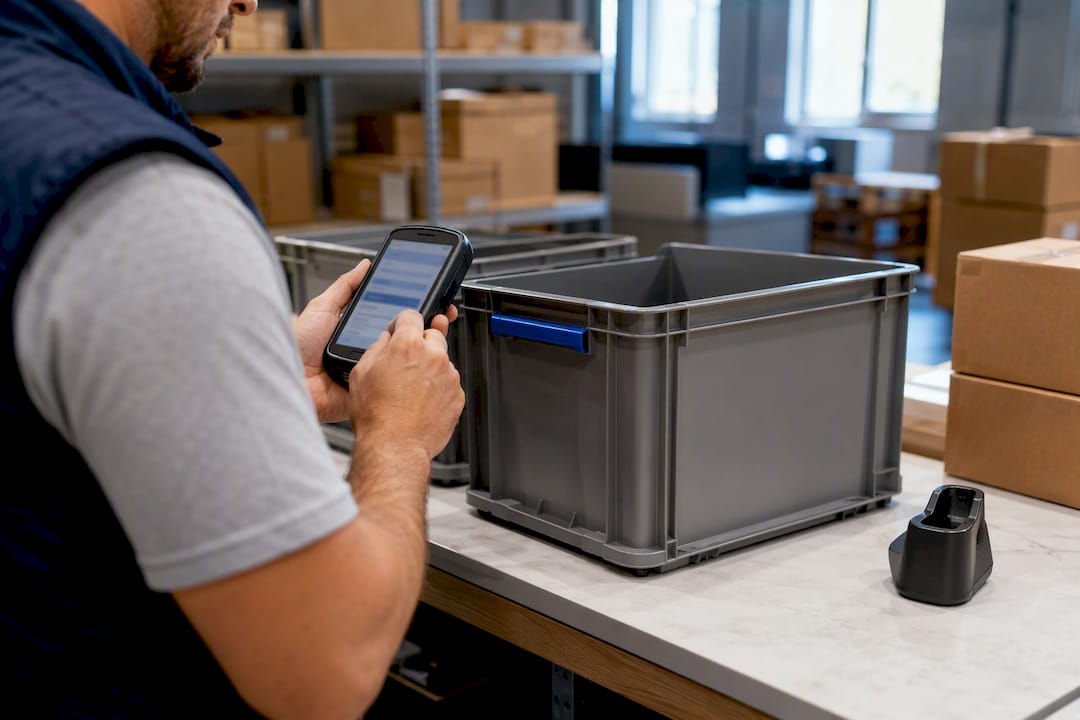
RFID earns its cost when SKU volume and unit value justify it, typically for larger operations moving high-value goods through multiple checkpoints. For most small and mid-sized brands, barcode scanning covers the accuracy gain at a fraction of the cost.
The bigger lever is integration. A WMS and IMS connected directly to your ERP eliminates the sync gaps that create phantom variances, giving you one on-hand record instead of three that disagree with each other. Real-time tracking and centralized visibility cut down reconciliation exceptions before they ever reach a human’s desk.
- Event-driven reconciliation flags variances the moment a mismatch occurs, instead of waiting for a scheduled count.
- Threshold-based auto-posting clears trivial variances automatically while routing material ones to a human reviewer.
- Any software you adopt should require structured count submissions (SKU, bin, timestamp, user), a full audit trail, and a mandatory reason-code field.
Pro Tip: Pilot automation rules on your lowest-risk SKUs first. Prove the thresholds work before you let the system auto-post adjustments on anything that touches revenue.
What Are the Right Thresholds, SLAs, and KPIs for Reconciliation?
Treat reconciliation as a control with numbers attached, not a spreadsheet exercise you get to when there’s time. That starts with a two-axis threshold: flag a variance if it crosses either a unit count or a dollar value, not just one or the other. A single missing low-cost fastener doesn’t need an investigation. A three-unit variance on a $400 SKU does.
Four KPIs tell you whether the whole system is working:
- Variance rate under 3% signals a healthy operation; higher rates point to systemic receiving or picking issues.
- Closure rate above 95% within SLA shows your team is actually closing investigations, not letting them pile up.
- Repeat variance rate under 5% on the same SKU or bin tells you whether root-cause fixes are sticking.
- Net adjustment value trending downward month over month means your process is improving, not just staying busy.
Run a monthly variance analysis and sort by reason code. If “receiving error” keeps showing up as the top code for the same three SKUs, that’s not a counting problem anymore, it’s a training or vendor problem.
How Does a 3PL Partnership Simplify Reconciliation?
Reconciliation gets harder every time another vendor touches your inventory without sharing data back to you in real time. Every additional handoff, warehouse, or fulfillment partner is another place a unit can go missing from your records without going missing from the shelf.
A live inventory portal shortens the time between “something looks off” and “here’s what happened,” because you’re looking at the same data your fulfillment partner is looking at, not waiting for an end-of-week export.
When you’re evaluating a 3PL partner for this reason, ask about:
- Live data access, not batch reports that lag a day or more behind actual counts.
- Reason-code support built into their adjustment workflow, so their corrections match your audit standards.
- A stated SLA for investigating variances, not a vague promise to “look into it.”
- SKU profitability reporting that ties inventory accuracy back to margin, not just unit counts.
Consolidated receiving and prep under one roof, rather than split across a receiving warehouse and a separate fulfillment center, removes one of the most common sources of transfer-related sync errors.
A Practitioner’s Checklist for Building Reconciliation Discipline
Start small. Pilot the full reconciliation process on your top A SKUs before rolling it out catalog-wide. That pilot is where you find out whether your materiality thresholds are set too tight or too loose, long before it costs you a bad audit finding.
Train inbound staff and counters on the same scanning procedure outlined in the reefer pre-trip inspection checklist, every time, no exceptions. Inconsistent counting technique creates variance noise that looks like a real problem when it’s actually a training gap.
Watch your closure rates weekly, not monthly. Reason-code trends tell you exactly where to spend your next process improvement dollar instead of guessing.
— Claudio Saenz
Get a Reconciliation Audit Instead of Chasing Spreadsheets
Most brands don’t have a reconciliation problem. They have a visibility problem created by too many vendors touching inventory without talking to each other. A 3PL provider removes that friction by giving you one live inventory portal instead of a patchwork of exports, plus SKU profitability analysis that shows which products are actually worth the shelf space they occupy.

Because a 3PL handles warehousing, retail prep, and direct-to-consumer fulfillment under one roof, there’s no second vendor’s numbers to reconcile against your own. Orders placed by 1PM CST ship same-day, and there’s no long-term contract locking you into a system that isn’t working. If you’re running Amazon or Walmart channels, the Amazon and Walmart prep service keeps retail-spec inventory aligned with the same live data feed you already use for direct-to-consumer orders.
Request a reconciliation audit and see what your current setup is missing on the services and pricing page.
Sources
- Inventory reconciliation process and best practices — Upzone
- Cycle count vs physical count — NetSuite
- Inventory discrepancy guide — Shopify
- Inventory reconciliation explained — Sumtracker
FAQ
What Are the Steps in the Inventory Management Process?
The core steps are receiving, storing, tracking, fulfilling, and reconciling inventory. Reconciliation is the checkpoint that catches errors introduced at any of the earlier stages, which is why it should run on a regular schedule rather than only during a crisis.
What Is the Process for Stock Reconciliation?
Stock reconciliation compares your system’s recorded quantities against a physical count, then investigates and documents any gap before posting an adjustment. The standard procedure freezes affected locations, pulls the book record, counts physically, flags variances above threshold, investigates the cause, and closes with a reason code and an owner.
What Are the Four Stages of Inventory?
Inventory generally moves through four stages: raw materials or incoming stock, work-in-process or prep, finished goods ready to ship, and goods in transit or already sold. Reconciliation checks accuracy at each handoff point between these stages, since that’s where transfers and sync issues most often create discrepancies.
How Do You Reconcile Material Records?
Material reconciliation follows the same logic as finished-goods reconciliation: compare the book quantity of raw materials or components to a physical count, then investigate variances against receiving records, production consumption logs, and scrap or waste reports. The reason code should distinguish between consumption, waste, and unrecorded transfers, since each points to a different fix.
Does Envio Logistics, Inc Help With Inventory Reconciliation?
Envio Logistics, Inc provides live inventory data through its portal, which shortens the time between spotting a variance and starting an investigation. Combined with SKU profitability analysis, brands get both accurate counts and a clear view of which SKUs are worth reconciling closely versus which ones matter less to the bottom line.
0 comments